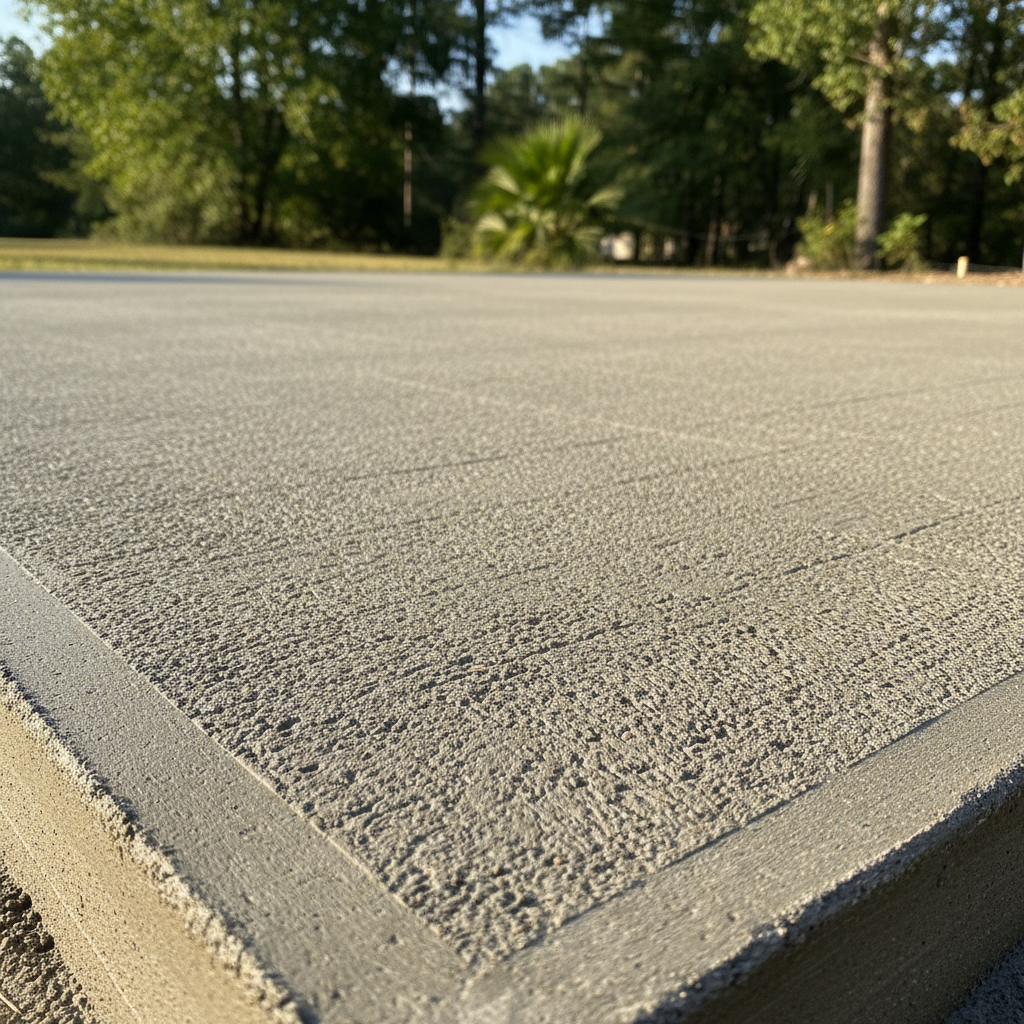
Alright, let's talk about concrete flatwork. Maybe you've got a spot in your yard – a worn-out patio, a cracked sidewalk, or you're dreaming of a new shed foundation. The big question usually is: can I do this myself, or do I need to call someone like me?
I see a lot of folks around Dothan, especially in those older neighborhoods like Highland Park, trying to tackle concrete projects. Some do a decent job, sure, but honestly, a lot end up spending more fixing mistakes than if they’d just hired a pro from the start. Concrete isn't rocket science, but it's definitely a skill. And it's unforgiving. Once it's set, it's set.
Before You Even Think About Mixing
First things first, you need to plan. You gotta know what you’re building and where. Is it a simple stepping stone path or a full-blown driveway that'll see heavy vehicles? The bigger and more critical the structure, the less likely it is a good DIY project, frankly.
- Permits: For anything beyond a small, non-structural patio, you'll probably need a permit from the City of Dothan. Don't skip this step. Trust me, dealing with fines and tear-outs later is a real headache.
- Utilities: Call 811 before you dig. Every single time. It's free, it's the law, and it saves you from hitting a gas line or an electrical conduit. You definitely don't want that kind of surprise.
- Drainage: This is huge, especially with our Dothan downpours. You need to make sure your new concrete slab slopes away from your house, or any other structure, at a minimum of 1/4 inch per foot. If water pools against your foundation, you're just trading one problem for another. Think about where that water is actually going to go.
- Soil Prep: This is probably the most overlooked part of DIY concrete. Around here, we've got some pretty expansive clay soils. If you don't compact your base properly, or if you pour directly onto disturbed, loose soil, that slab is going to crack and settle. You need a stable, well-compacted subgrade. For anything serious, I recommend at least 4 inches of compacted gravel (like crushed concrete or limestone) over a well-compacted subgrade.
The Pour: Where DIY Gets Tricky
This is where the rubber meets the road, or more accurately, where the concrete meets the ground. For small, non-structural stuff like a little pad for your trash cans or a small stepping stone, mixing bags of concrete yourself can work. But even then, getting the water-to-cement ratio right is crucial. Too much water makes it weak; too little makes it unworkable.
Here's why bigger projects are usually best left to us pros:
- Volume: A typical patio might need several cubic yards of concrete. You can't mix that in a wheelbarrow, can you? You need a truck. And once that truck arrives, you're on the clock.
- Time: Concrete waits for no one. You have a limited window to get it poured, screeded (leveled), floated (smoothed), and finished. If you're not experienced, you'll be rushing, and that's when mistakes happen.
- Tools: We've got the power screeds, bull floats, edgers, groovers, and vibrators. You might have a shovel and a 2x4. The right tools make a massive difference in the quality and longevity of the finish.
- Finishing: This is an art. Getting a smooth, durable, and aesthetically pleasing finish takes practice. Broom finish, trowel finish, exposed aggregate – they all require specific techniques and timing. A poorly finished slab will look bad and wear out faster.
For anything like a driveway, a large patio, or a foundation, you really, really want a professional. We understand the nuances of local conditions, we have the crew, and we have the equipment to get it done right, the first time. At Vertex Concrete Constructions, we've poured enough concrete in this town to know exactly how our summer heat and humidity affect the pour and set times.
After the Pour: Curing and Care
So, you got your concrete down, whether you did it or we did. Now what? Curing is just as important as the pour itself. This isn't just letting it dry; it's allowing the chemical reaction (hydration) to happen properly, which increases strength and durability. If concrete dries out too quickly, it won't reach its full strength and will be more prone to cracking.
- Keep it Wet: For at least 7 days, and ideally 28 days, you want to keep that concrete moist. You can do this by misting it with water, covering it with plastic sheeting, or using a curing compound. This is especially important during our hot Dothan summers.
- Protect it: Keep heavy traffic, vehicles, and anything that could stain or damage it off the new slab for at least a week, preferably longer. Give it time to gain strength.
- Sealing: Once it's fully cured, usually after 28 days, consider applying a good quality concrete sealer. This will protect it from stains, moisture, and general wear and tear, making it last longer and look better.
- Cracks: You might see some small hairline cracks. This is normal. Concrete shrinks as it cures. Control joints (those lines you see cut into concrete) are there to encourage the concrete to crack in those specific, less noticeable places. If you see wide, uneven cracks, that's a sign of bigger issues, usually related to poor subgrade prep.
Look, I'm all for homeowners tackling projects they can handle. But when it comes to concrete flatwork, especially anything structural or larger than a small path, you're often better off investing in a professional. It saves you time, backache, and potentially a lot of money in repairs down the road. If you're on the fence, give us a call. We're happy to talk through your project and give you an honest opinion on what it takes.